

 I'm A Patient
 I'm A Provider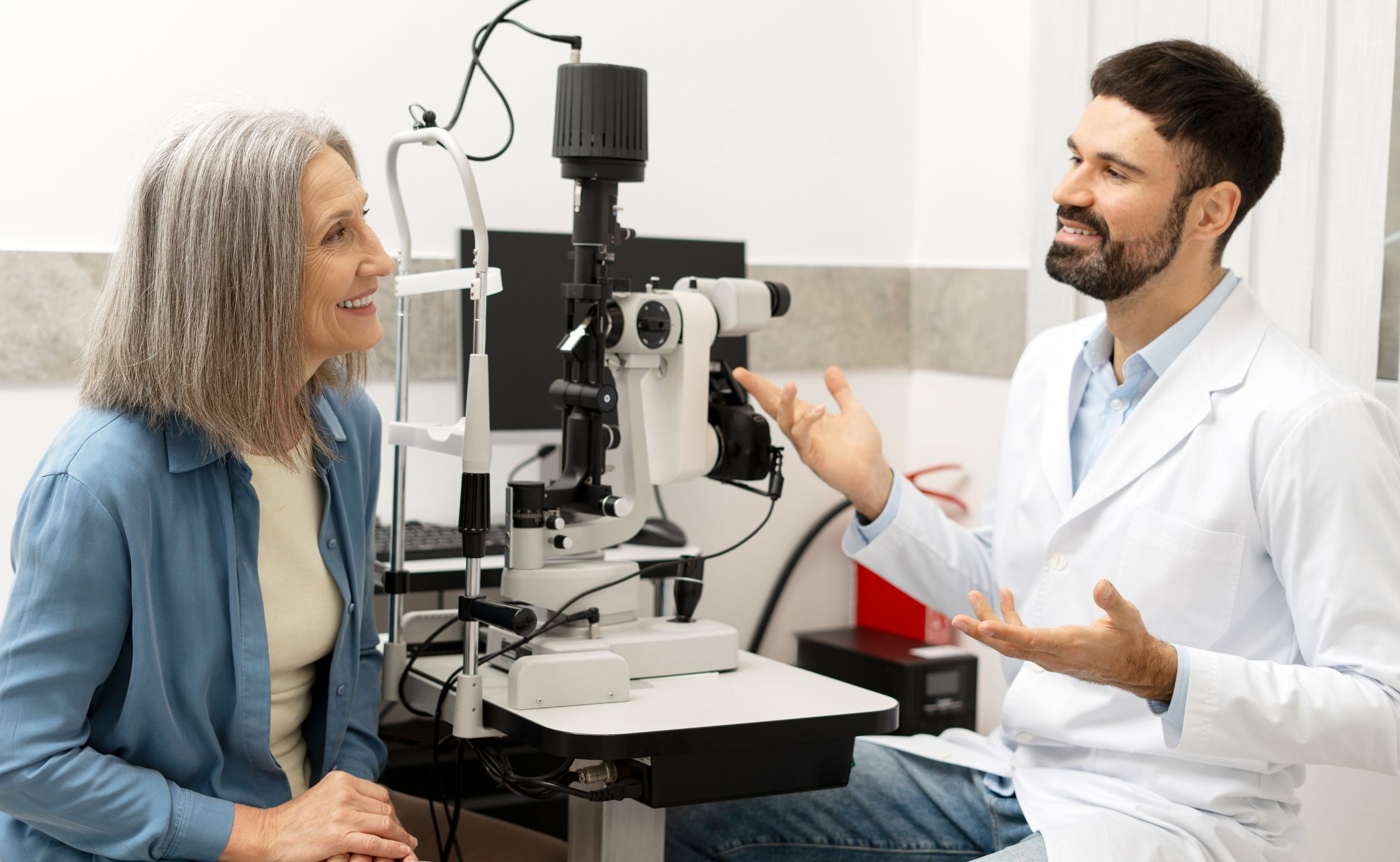
Overview
In Canada, Health Canada has authorized MacuMira to deliver microcurrent electrical stimulation to tissues near the eye, and it is intended to improve visual function in eligible AMD patients. The specific device a clinic uses matters because regulatory approval, published clinical evidence, and the clinician’s familiarity with the device protocol all affect the quality and safety of the treatment a patient receives.1
Not all products marketed as “microcurrent therapy” for the eyes meet this standard. Patients and clinicians should verify regulatory status before offering or accepting treatment.2
How Microcurrent Stimulation Devices Work
The Mechanism
Microcurrent stimulation devices deliver low levels of electrical current through electrodes placed on the skin near the eye. Unlike the higher-intensity electrical stimulation used in some other medical applications, microcurrent therapy is designed to work below the threshold of muscle contraction, so it’s generally well tolerated by patients.
The proposed mechanism involves supporting cellular metabolism in the retinal pigment epithelium (RPE), a cell layer progressively damaged by dry AMD. Low-level electrical stimulation is hypothesized to support this cell layer and improve visual function.
Clinical Delivery
Treatment sessions are conducted in a clinical setting. Small electrodes are placed on the patient’s skin, near their eyes, and the device delivers a preprogrammed stimulation. Sessions are typically brief, and many patients find they can return to normal activity afterward.
MacuMira is delivered according to a defined treatment protocol, with follow-up treatments typically recommended after the initial treatment period. The treating eye care provider determines the appropriate schedule based on the patient’s condition and response. This approach reflects the ongoing nature of dry AMD rather than treating it as a condition that can be resolved with a finite course of therapy.4
Results
MacuMira is designed to improve visual function, not to prevent or reverse the progression of dry AMD. Visual function improvements are typically measured using the ETDRS letter chart for visual acuity and contrast sensitivity testing, both of which can capture how well a patient can see under different conditions. These functional measures can help reflect how AMD affects daily life.
In the published randomized, sham-controlled clinical trial for MacuMira, the treatment group showed statistically significant improvement in both visual acuity and contrast sensitivity. The average gain was 8.2 letters on the ETDRS scale, with 48% of treated patients gaining 10 or more letters. Contrast sensitivity improved by an average of 0.24 log units. There were no device-related serious adverse events recorded in the trial or in subsequent real-world use.4
Regulatory Standards
Why Regulatory Authorization Matters
In Canada, a Medical Device Licence indicates that Health Canada has authorized a device for sale for its licensed indication after reviewing information about its safety and effectiveness. That authorization does not mean the device is appropriate for every patient or that it guarantees a particular outcome. This review process is different from the standards that apply to wellness devices or consumer health products, which may use similar language but are not subject to the same clinical evidence requirements.2
For clinicians considering which device to adopt, verifying regulatory status is a professional obligation, not an optional due diligence step. Using an unapproved device in a clinical context carries risk and fails the patient’s expectation that the technology offered has been independently evaluated.
Results Surrounding Regulatory Approval
Regulatory authorization means a device has met the evidence threshold for safety and efficacy for its approved indication, as assessed by the regulator at the time of review. It does not mean the device is appropriate for every patient, that outcomes are guaranteed or that the device performs equivalently for patients outside the studied population. A clinician still needs to apply clinical judgment about eligibility, set appropriate expectations and monitor outcomes over time.2
Authorization is also not permanent, as post-market surveillance continues. Clinicians and clinics should stay current with any updated guidance from Health Canada or the device manufacturer regarding patient selection, device use or safety reporting.
Authorized Devices and Unauthorized Devices
The term “microcurrent therapy” is used in a range of contexts, from clinical medical devices to consumer wellness products, spas and self-administered at-home systems. It’s important to note that not all uses of the term mean the same thing.
Patients sometimes arrive at consultations having read about or tried unregulated microcurrent products. The appropriate response may be to acknowledge the interest, explain the distinction clearly and redirect the conversation to approved options with a documented evidence base.
What Clinicians Should Consider When Selecting a Device
Evidence Quality
The strength of clinical evidence behind a device should be the primary consideration when recommending a service to a patient. A randomized, sham-controlled trial with meaningful sample sizes, pre-specified outcome measures and independent statistical analysis represents a significantly stronger evidence standard than case series, observational reports or manufacturer-provided observational data. Clinicians should review the published trial, not just a marketing summary, before making adoption decisions.3
Patient Eligibility Criteria
For MacuMira, the trial enrolled patients with dry AMD and visual acuity between 20/50 and 20/200. Patients with better baseline acuity may show a smaller improvement due to a ceiling effect, not because the device is ineffective, but because the measurable scope for change is smaller. Clinicians should factor this into the eligibility conversation and calibrate expectations accordingly.4
Treatment Protocol and Ongoing Monitoring
A device with a published protocol provides a framework for consistent treatment delivery across patients and practitioners. Clinicians should follow the approved protocol rather than improvising session frequency or electrode placement and should document outcomes at defined intervals to track whether individual patients are responding as expected.
Patients who are not responding after the initial treatment period should have that outcome reviewed and a decision made about whether to continue, modify the approach or redirect care. Device-based therapy should be subject to the same clinical accountability as any other treatment.
Questions Patients Should Ask:
- What device do you use and does it hold a Health Canada Medical Device Licence for dry AMD?
- Has this device been studied in a published, peer-reviewed clinical trial? What did the trial show?3
- How many treatments are involved in the initial course and what is the ongoing maintenance schedule?
- Based on my current visual acuity and AMD stage, what kind of results could I expect to see?
- How will we track whether the treatment is working for me and what would indicate that we should reconsider?
- What are the device’s known contraindications or exclusion criteria?
Conclusion
If you’re considering microcurrent therapy, ask which device the clinic uses and whether Health Canada has licensed it for treating dry AMD. MacuMira is a Health Canada-authorized device for improving visual acuity and contrast sensitivity in patients with dry AMD. It should be used under the supervision of an eye care professional and is not indicated for wet AMD. Patients and clinicians should verify regulatory status and review published evidence before adopting or accepting any device for clinical use.
Disclaimer
This article is for educational purposes only and does not constitute medical advice. Clinicians should apply their own professional judgment to patient selection and treatment decisions. Patients should consult a qualified eye care professional before beginning any treatment for dry AMD.
Glossary
Microcurrent stimulation: Delivery of very low-level electrical current, in the microampere range, to tissues near the eye. Used in approved medical devices to improve visual function in dry AMD patients.
Health Canada Medical Device Licence: Regulatory authorization confirming that a medical device meets Canadian standards for safety and efficacy for its approved indication.
Retinal pigment epithelium (RPE): A layer of cells beneath the photoreceptors of the retina that supports their health and function. Deterioration of the RPE is a central feature of dry AMD.
ATP (adenosine triphosphate): The primary energy currency of cells. Proposed mechanism by which microcurrent stimulation may support RPE cell metabolism.
MacuMira: An authorized medical device indicated to improve visual function in patients with dry AMD, delivered as low-level electrical stimulation in a clinical setting. For use under the supervision of an eye care professional. Not indicated for wet AMD.
ETDRS scale: The Early Treatment Diabetic Retinopathy Study visual acuity measurement system, used letter by letter. The standard outcome measure in AMD clinical trials.
Contrast sensitivity: The ability to distinguish objects from their background at varying contrast levels. Often reduced in dry AMD independently of high-contrast visual acuity.
Dry AMD: A progressive retinal condition in which the macula deteriorates gradually. The most common form of AMD. Distinct from wet AMD.
Wet AMD: A form of AMD involving abnormal blood vessel growth beneath the retina, requiring different treatment. Approved microcurrent stimulation devices are not indicated for wet AMD.
Ceiling effect: In clinical trials, the phenomenon where patients with high baseline function have less measurable room to improve, reducing the absolute effect size observed even if the treatment is effective.
Sham-controlled trial: A clinical trial design in which the control group receives a treatment that mimics the active intervention in all observable respects except the active component. The gold standard for demonstrating device efficacy beyond placebo effect.
References
1. Medical Device Licences. Health Canada. Date not listed. Accessed June 2026. https://www.canada.ca/en/health-canada/services/drugs-health-products/medical-devices/licences.html.
2. Medical Devices, Regulatory Requirements. Health Canada. Date not listed. Accessed June 2026. https://www.canada.ca/en/health-canada/services/drugs-health-products/medical-devices.html.
3. Age-Related Macular Degeneration. National Eye Institute, National Institutes of Health. Last reviewed November 2023. Accessed June 2026. https://www.nei.nih.gov/eye-health-information/eye-conditions-and-diseases/age-related-macular-degeneration.
4. Evaluation of visual acuity in dry AMD patients after microcurrent electrical stimulation. Parkinson KM, Sayre EC, Tobe SW. International Journal of Retina and Vitreous. Published May 2023. Accessed June 2026. https://macumira.com/wp-content/uploads/2025/07/MacuMira-Clinical-Trial.pdf.
5. Understanding Macular Degeneration. American Academy of Ophthalmology. Published November 2025. Accessed June 2026. https://www.aao.org/eye-health/diseases/amd-macular-degeneration.